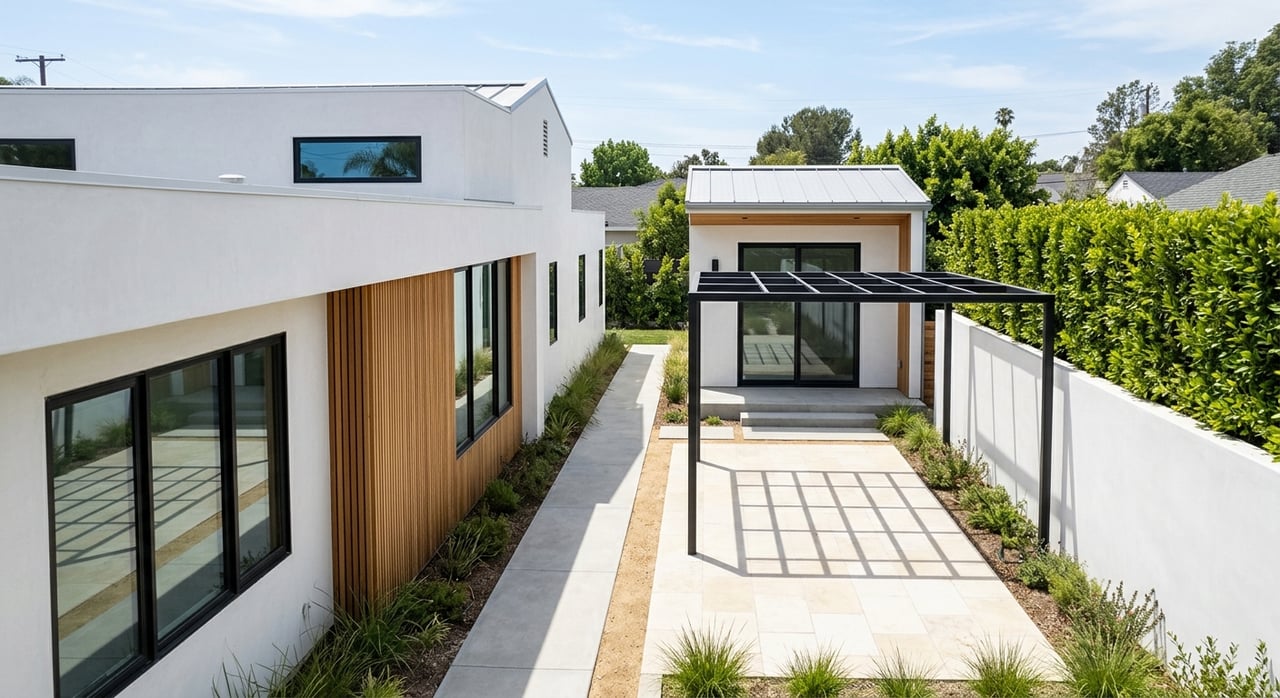
San Jose SB9 Guide for Small Investors and Lot Splits
May 14, 2026
May 14, 2026
If you own or are shopping for a single-family property in San Jose, SB9 can open the door to more than one path to value. For small investors, that can mean a duplex, a lot split, or a combination that creates more usable housing on land that once held just one home. The opportunity is real, but so are the rules, site limits, and title issues that can make or break a deal. This guide walks you through what SB9 can allow in San Jose, where investors get tripped up, and how to screen a property before you spend heavily on plans. Let’s dive in.
In San Jose, SB9 remains in effect, and the city’s application materials are active, though the city notes they are subject to change. California describes SB9 as a ministerial process that can allow up to two primary units on a single-family lot, a parcel split into two parcels, or both.
In practical terms, San Jose says a qualifying single-family lot may support a duplex on the original lot, a subdivision followed by a single-family or duplex home on each parcel, or a duplex plus ADUs if setback rules allow. On an unsplit lot, that can add up to as many as four units, depending on the site and design.
That matters because SB9 is not just a theory in San Jose. As of March 2025, the city reported nearly 60 SB9 subdivision filings and more than two dozen single-family-home or duplex filings. For a small investor, that signals local adoption and a real workflow inside the city system.
Before you think about unit count, floor plans, or resale value, you need to know whether the lot qualifies. San Jose’s current guidance points to single-family lots in these districts: R-1-1, R-1-2, R-1-5, R-1-8, R-1-RR, and certain PD districts.
If a property already has a duplex or multifamily residence, it is not eligible for SB9 under the city’s checklist. In some cases, ADUs may still be possible, but that is a different path from SB9.
State and city rules also screen out certain sites entirely. That includes parcels with historic district or landmark status and parcels affected by environmental constraints such as wetlands, farmland, conservation areas, wildlife habitat, conservation easements, flood-risk areas, fire-hazard areas, or earthquake-hazard areas.
For investors, this is the first lesson: do not underwrite an SB9 deal on zoning alone. A lot can look promising at first glance and still fail the basic eligibility test.
Some of the most important screens in San Jose involve existing occupants and prior housing history. The city says that if a property has rent-controlled units, units removed under the Ellis Act within the past 15 years, or units occupied by tenants within the last three years, a subdivision and future buildings cannot alter or demolish those units.
This is a major issue for small investors looking at older properties or homes with informal occupancy history. If your plan depends on removing or changing an occupied unit, you need to confirm the facts early.
San Jose also says adjoining lots cannot be split under SB9 by the same applicant, or by applicants acting in concert. State law adds that a parcel may be subdivided only once under SB9. That limits repeat-split strategies and makes lot history part of your due diligence.
If your strategy includes a subdivision, SB9 does not allow unlimited creativity. State law generally allows no more than two new parcels, and they must be roughly equal in area. One parcel cannot be smaller than 40% of the original lot, and each new parcel generally must be at least 1,200 square feet unless a local ordinance allows smaller.
San Jose’s checklist adds an important local requirement. For subdivision projects, you typically need either two lots with at least 30 feet of street frontage or one lot served by a 12- to 15-foot access corridor.
State law also requires an owner-occupancy affidavit for a lot split. The applicant must commit to living in one of the resulting units as a principal residence for at least three years. San Jose’s checklist also says a dwelling unit must exist on the property when the subdivision is approved.
For many small investors, this is where strategy becomes personal. If you want a clean investment-only structure without owner occupancy, a lot split may not fit your plan.
A lot may qualify for SB9 and still fail as a buildable duplex project once design standards come into play. San Jose’s duplex checklist is detailed, and those details often drive feasibility.
The city says there is no minimum parking requirement for a duplex project, though any parking you do provide must meet location rules. That can help on tighter urban lots where parking layout would otherwise consume too much buildable area.
Setbacks are also critical. Front setbacks depend on the zoning district, while side and rear setbacks are generally at least 4 feet. Height is generally limited to 30 feet and two stories, with a lower limit of 20 feet and one story within 20 feet of the rear property line in most cases.
San Jose also applies floor area ratio and unit-size rules. The checklist notes a combined FAR test and an 800-square-foot fallback if FAR is higher. For investors, that means a concept that works on paper may still be too bulky once setbacks, height, and FAR all interact.
Two parcels with the same zoning can have very different outcomes under SB9. Site conditions often decide whether a project is practical, affordable, or delayed.
San Jose advises applicants to check floodplain maps, very high fire severity maps, and geohazard maps. If a lot is in a floodplain or floodway, a project may still move forward, but special building requirements may apply. If the property is in a geologic hazard zone, the city may require geohazard clearance along with separate grading or drainage permits.
The city also flags airport-vicinity height limits, historic-resource maps, and code-violation checks as part of normal due diligence. For easements, San Jose notes that title reports are more accurate than tract maps.
That last point matters more than many buyers realize. A title issue can shrink your usable building envelope even when zoning appears favorable.
City approval is not the only thing that affects your project. San Jose’s SB9 materials warn that private CC&Rs may restrict the number of units that can be built.
The city does not enforce private agreements between owners, but that does not make those agreements irrelevant. If a property is subject to HOA rules or recorded private restrictions, you will want title review and, when needed, direct coordination before you assume the deal works.
For a small investor, this is another reason to keep your early diligence broad. Zoning is only one layer of the stack.
The most efficient investors do not start with architecture. They start with a quick feasibility screen that weeds out bad candidates before major soft costs begin.
A practical San Jose workflow usually looks like this:
This approach helps protect your margin. It also gives you a better chance of matching the right property to the right strategy, whether that is a duplex, split, hold, resale, or a pass.
San Jose offers a few practical ways to test a site before full submittal. The city provides a no-fee phone consultation of about 15 minutes, and it offers a focused review for a single-family house or SB9 subdivision for a base fee of $398 with an approximate 30-day turnaround.
For more complex properties, the city also offers a preliminary review consultation where multiple departments can comment on layout and architecture before formal filing. That can be useful when site constraints are not obvious from the zoning map alone.
For lot splits, the city’s Public Works instructions say the application package should be submitted without a tentative map. Applicants should be prepared with a current title report dated within 90 days, sealed closure calculations from a licensed surveyor or registered civil engineer, easement and deed documents, and the required city checklists.
San Jose’s ePlan system is used for uploads, comments, status tracking, and permit issuance. Depending on the site, you may also need separate permits or clearances for grading, drainage, geohazards, utility connections, or driveway work.
At the state level, qualifying SB9 duplex projects and urban lot splits must be approved or denied within 60 days after the local agency receives a complete application. If denied, the agency must provide a written list of deficiencies and how to fix them.
For most small investors, the biggest SB9 risk is not demand. It is a mismatch between the concept and the property.
Here are the underwriting questions worth asking first:
If you are evaluating a split, also remember the owner-occupancy requirement. If you are evaluating rental income, remember another key rule: units created under SB9 must be rented for periods longer than 30 days. San Jose’s subdivision checklist says a deed restriction must be recorded to reflect that requirement.
That means short-term rental assumptions do not belong in your initial income model.
SB9 can affect more than design and permits. The Santa Clara County Assessor notes that transfers can raise reassessment questions, and new construction can trigger supplemental assessments.
That makes entity structure, trust transfers, and parcel-level buy-sell planning worth reviewing early. If your strategy includes a split followed by a sale, hold, or internal transfer, build those conversations into your timeline before closing or filing.
For small investors, tax planning is not a side issue. It can materially change the economics of a project.
The strongest SB9 opportunities in San Jose often share a few traits. They sit on qualifying single-family lots, have clean frontage or workable access, avoid major hazard and historic issues, and offer a building envelope that can realistically support the intended unit mix.
The best opportunities also tend to have a clean title story and a realistic execution plan. A modest, clean deal with fewer surprises often outperforms a more ambitious property that looks exciting but carries hidden entitlement friction.
That is why a practical, local screen matters so much. In SB9 investing, the upside usually comes from buying smarter before you build.
If you are looking at a San Jose property with duplex or lot-split potential, the right next step is a grounded feasibility review before you commit to the deal. Shawn Jahan helps buyers and small investors identify redevelopment upside, evaluate SB9 fit, and move with a clear plan in Silicon Valley’s fast-moving market.
Stay up to date on the latest real estate trends.
With 20 years in Bay Area markets, Shawn Jahanbani delivers zoning expertise, strategic property insight, optimization, and skilled negotiation to maximize value.